According to James Campbell there is only one plot: a hero comes to town. In this town, the hero is something more American, a little more crunchy: he's the anti-hero, and he's come to this town, our town, in a horse-drawn wagon, the sides painted in bright, primary colors, curly serif letters announcing that
Doctor Wilder's Cure for the Common Complaints of Hard-Working Folks is here.
The cure is a wonderous thing. Housed in a small blue glass bottle with a jeweled stopper, the liquid catches the sunlight and sparkles like magic. Five bottles are quickly sold to the dusty, tired farmers and shopkeepers, then many more to the bankers, the tellers, the mothers, the soldiers. In this town everyone works, from sun-up to sun-down, and the farmers have aching backs, the bankers aching eyes, the soldiers aching feet. Dr. Wilder is tireless in extolling the medicinal, almost miraculous, qualities of the cure. At the end of the day, all the bottles are sold and all the customers are home taking their medicine right before bed for the first night of a six night course.
At the end of six nights most of the townspeople have found no relief, half found themselves with debilitating migraines, the other half with facial tics and restless leg syndrom.
After a heated town meeting, the townspeople, every single one of them, gather pitchforks and torches and meet Dr. Wilder on the dusty road out of town intending to burn his wagon down and get their money back, either in coin or in blood.
Because that's the way the free market worked before governemental regulation.
When citizens have no recourse after they are cheated or injured by snake-oil salesmen or the cable company, they get out their pitchforks, and they get out their torches, and they get their own back any way they can.
Soon this and other dusty roads were littered with leaky charlatans and the towns with twitching, glowering townspeople. Something had to be done.
This is what was collectively decided: In exchange for not being burned out and stuck with pitchforks tradesmen and women agree to abide by rules and regulations. Those regulations vary from state to state but by and large they require business not to harm customers, to use safe methods and ingredients, and to adhere to industry standards and practices. In return, townspeople agree to appeal to the system instead of torches and pitchforks when injury occurs. Both sides contribute to the adminstration and monitoring of these regulatory and consumer advocacy agencies via taxes and special fees.
So, when elected officials vote to defund the EPA and OSHA and the like they are reneging on the bargain we all made back in the day. They are relieving business of its obligation but haven't given consumers a single sliver of pitchfork tine back. That is not right. It's hypocritical, and it is not free market. It is weighted market and it's weighted in favor of business.
Let's illustrate the enormous and egregious hypocrisy of free marketeers.
The cell phone industry and the cable industry is massively non-competitive. From contracts, which are anti-competitive, anti-consumer, to the dearth of actual head-to-head competition, to the non-standardized equipment (which inflates costs to the consumer and to the community), to the costly inflated monthly plans, ... really, they are industries which are operating completely outside the free market environment.
If Rand Paul were actually pro free market, he would attack those contracts, he would unravel the byzantine barriers to entry, and he would dismantle the government/business deals that deter proper competition. But this he will never do. Because Rand Paul is not a libertarian, he is not a pure free market advocate; he is a unethical, unprincipled corporate hack. Just like every other Republican. He is not on the side of the people. He is on the side of business profit and everything he does, everything he says, is to that end.
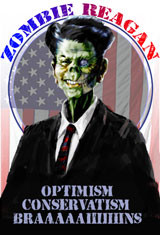 Come on. They want Ronald Reagan. If they could just dig him up, prop him up, and run him again, they would be so happy. But what they get are G. W. Bush II. All these candidates are dumb. Dumb, dumb, dumb. They are dumb and glib, just like George W. Bush. If they know anything, and most don't, they sometimes know something about business (just like George W. Bush), which makes them shitty politicians who sleep with shitty greedy people who have shitty anti-worker goals.


